FIFA MEDICAL SET PIECE
Cervical spine injury
The colour-coded protocol, the FIFA film, collar, log roll and extrication — in one place.
- Initial priority of the team: always assess for potential sudden cardiac arrest.
- Use this set piece when a neck injury is suspected and cannot be ruled out clinically.
- Treat any issue you find before moving on to the next assessment.
Collapsed + unresponsive = sudden cardiac arrest
Start chest compressions and apply the AED. Do not delay CPR or defibrillation for the cervical spine in a non-contact collapse.
FIFA SKILL ZONE FILM
FIFA's own film of the full set piece. Tap play — needs a connection.
The full colour-coded set piece for a suspected neck injury: MILS, assessment, collar, log roll or scoop and extrication.
Watch on FIFA's website (opens in a new tab)CLEARING THE CERVICAL SPINE
FIFA: the spine is cleared only if all 6 are met.
- No midline tenderness
- Glasgow Coma Scale (GCS) 15
- No distracting injury
- No neurology
- No concerning mechanism (e.g. fall onto the head, axial load)
- Active range of movement: 45° lateral rotation to each side — the player moves, not the clinician
Mnemonic — NSAID
Neurological deficit · Spinal midline tenderness · Altered mental status (GCS < 15) · Intoxication (includes strong analgesics) · Distracting injury. Any one present → the spine cannot be cleared; extricate in a collar.
- Start manual in-line stabilisation (MILS) and palpate for midline tenderness.
- An alert, conscious player splints their own neck — an early collar is not required.
- Clearing can wait until the primary survey is done. The collar goes on as part of extrication.
- FOCUS red flags for the neck: midline tenderness, restricted active movement, unexplained limb weakness or sensory change, numbness / tingling.
THE SET PIECE — BY COLOUR
Colours match the FIFA Pre-Match Emergency Action Plan roles. May flip all positions depending on the site of injury and hazards.
- 1
SUSPECTED CERVICAL SPINE INJURY — CANNOT BE RULED OUT CLINICALLY
BLACKTeam leader. Focus on good communication. Ensure the ambulance is called.
ORANGEImmobilise the cervical spine (MILS).
REDA (c-spine) B C assessment.
GREENBring the FIFA bag. Assist as directed by the team leader.
BLUEBring oxygen.
WHITEBring the scoop and splints. Assist as directed by the team leader.
- 2
AIRWAY ASSESSMENT
ORANGEJaw thrust (immobilise the spine).
REDApply an airway adjunct and / or trauma mask if needed.
BLUEOxygen at 15 L/min to the trauma mask.
- 3
BREATHING ASSESSMENT
ORANGEImmobilise the spine. Inform if any airway issues.
REDRespiratory rate. 2 hands on 3 places.
- 4
CIRCULATION ASSESSMENT
ORANGEImmobilise the spine. Inform if any airway issues.
REDPulse rate. 2 hands on 3 places.
- 5
DISABILITY ASSESSMENT
ORANGEImmobilise the spine. Inform if any airway issues.
REDAVPU (alert, voice, pain, unresponsive). 2 pupils. Motor and sensation in 3 places.
- 6
SET UP TO EXTRICATE AS PER THE FIFA SET PIECE
Scoop and basket below the feet, in line with the player.
ORANGEImmobilise the spine. Inform if any airway issues. Lead the log roll.
REDSize and apply the collar, then reassess the airway. Chest in the log roll.
BLUEPelvis in the log roll.
WHITELegs in the log roll.
GREENPrepare to assist / apply the extrication device.
- 7
EXTRICATION DEVICE APPLIED
ORANGEImmobilise the spine until blocks and tape are on — then you can remove your hands.
REDApply straps. Apply blocks, then tape. Reassess.
BLUEApply straps.
WHITEApply straps.
- 8
UTILISE THE BASKET (IF PRESENT) — EXTRICATE USING 6 PEOPLE IF POSSIBLE
Hands On 1, 2, 3: 1 observation, then 2 hands on 3 places — for B, C and D.
COLLAR AND HEAD BLOCKS
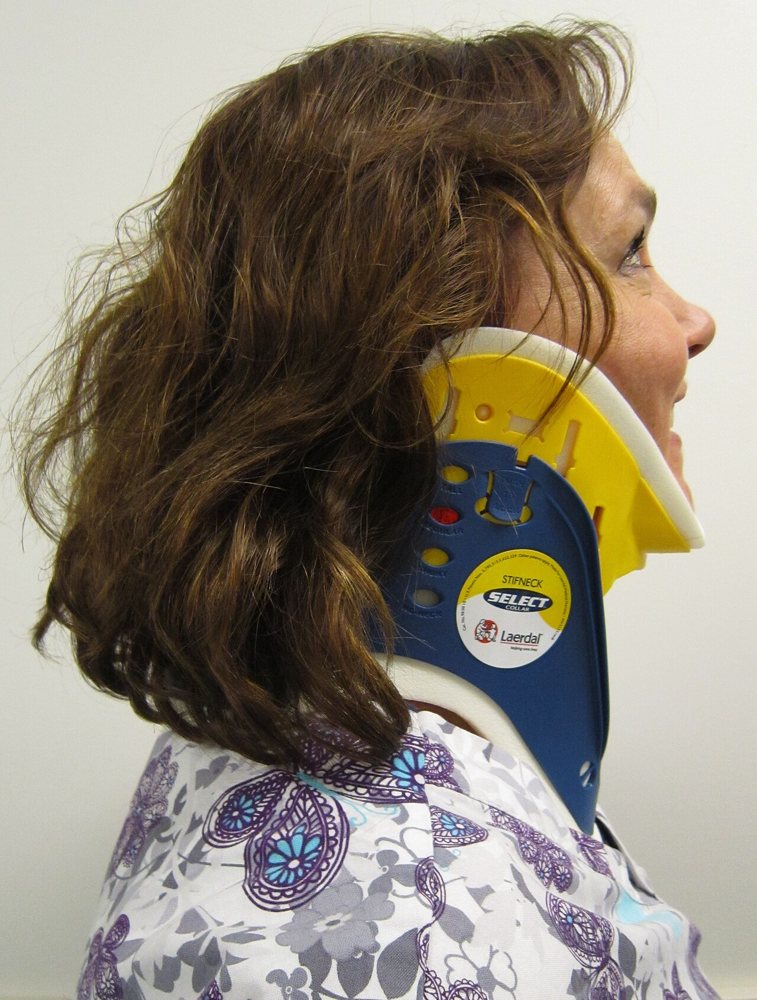
- Maintain MILS throughout.
- Size: neutral head, line from the chin back to the sternomastoid, measure fingerbreadths down to trapezius.
- Between two sizes → start with the SMALLER one (too big extends the neck).
- Position the posterior section; support the chin in the chin piece. Secure without over-tightening.
- Check the mouth can still open, then reassess the airway.
- Blocks placed evenly, fixed to the device, then tape. Keep access to the airway and ears.
MILS → SIZE → COLLAR → STRAPS → BLOCKS → TAPE → RELEASE
- Contraindication: airway obstruction — keep MILS instead until the airway is dealt with.
- A collar alone does not immobilise. Keep MILS until blocks and tape are on.
- Follow local guidance — some countries no longer use collars.
LOG ROLL AND EXTRICATION
- Head (Orange)
- MILS. Controls the move: explains the signal and says how far — 90° log roll, or a 15–20° tilt for a scoop.
- Chest (Red)
- One hand on the far shoulder, one on the hip.
- Pelvis (Blue)
- One hand on the waist, the other under the knee.
- Legs (White)
- One hand under the lower leg, the other under the ankle.
- Fifth person (Green)
- Places the scoop or board.
Extrication order
- Size and fit the collar — check the mouth can still open.
- Log roll or tilt onto the scoop — Orange leads the count.
- Apply straps — the first, centre strap lined up with the sternum.
- Apply head blocks and fix them to the device, then tape.
- Only now can MILS be released.
- Slide the basket under the scoop and extricate with 6 people if possible.
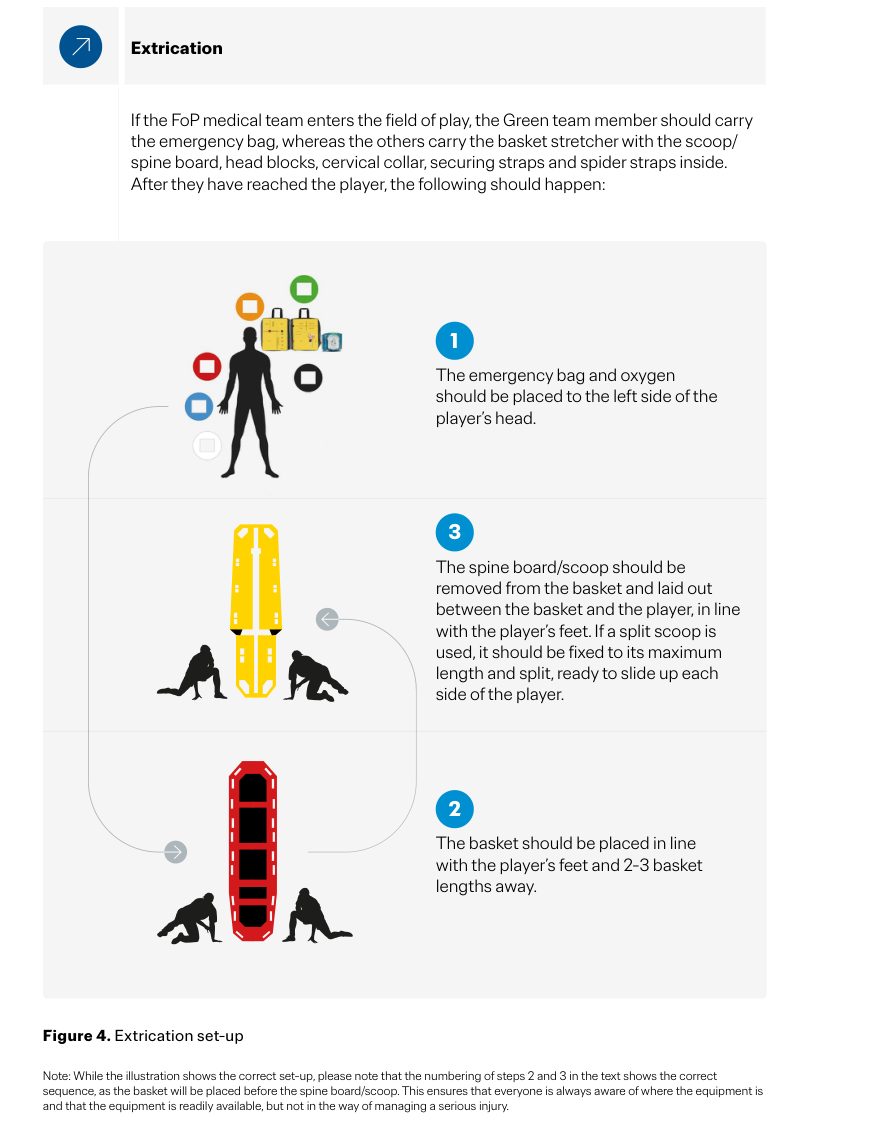
For trauma: scoop stretcher and basket, set up below the feet in line with the player — basket 2–3 lengths away. A scoop moves the player only ~15° instead of a 90° log roll.
MORE FILMS
Assessment, set-up, collar, log roll and scoop. Each film opens on its owner's website.
- Hands On 1, 2, 3FIFA Skill Zone · 4:02Open — Watch on FIFA's website (opens in a new tab)
Red runs a full A–E assessment of an injured player: 1 observation, 2 hands on 3 places.
Watch on FIFA's website (opens in a new tab) - Setting up of equipmentFIFA Skill Zone · 1:28Open — Watch on FIFA's website (opens in a new tab)
How the team lays out the bag, oxygen and extrication kit around the player as per the FIFA Medical Set Piece.
Watch on FIFA's website (opens in a new tab) Neutral head: line from chin back to sternomastoid, measure fingerbreadths down to trapezius.
Watch on YouTube (opens in a new tab)Four people + a fifth to place the device. The person at the HEAD controls the move and the count.
Watch on YouTube (opens in a new tab)FIFA prefers a scoop for trauma: only ~15° of movement vs 90° log roll for a board.
Watch on YouTube (opens in a new tab)
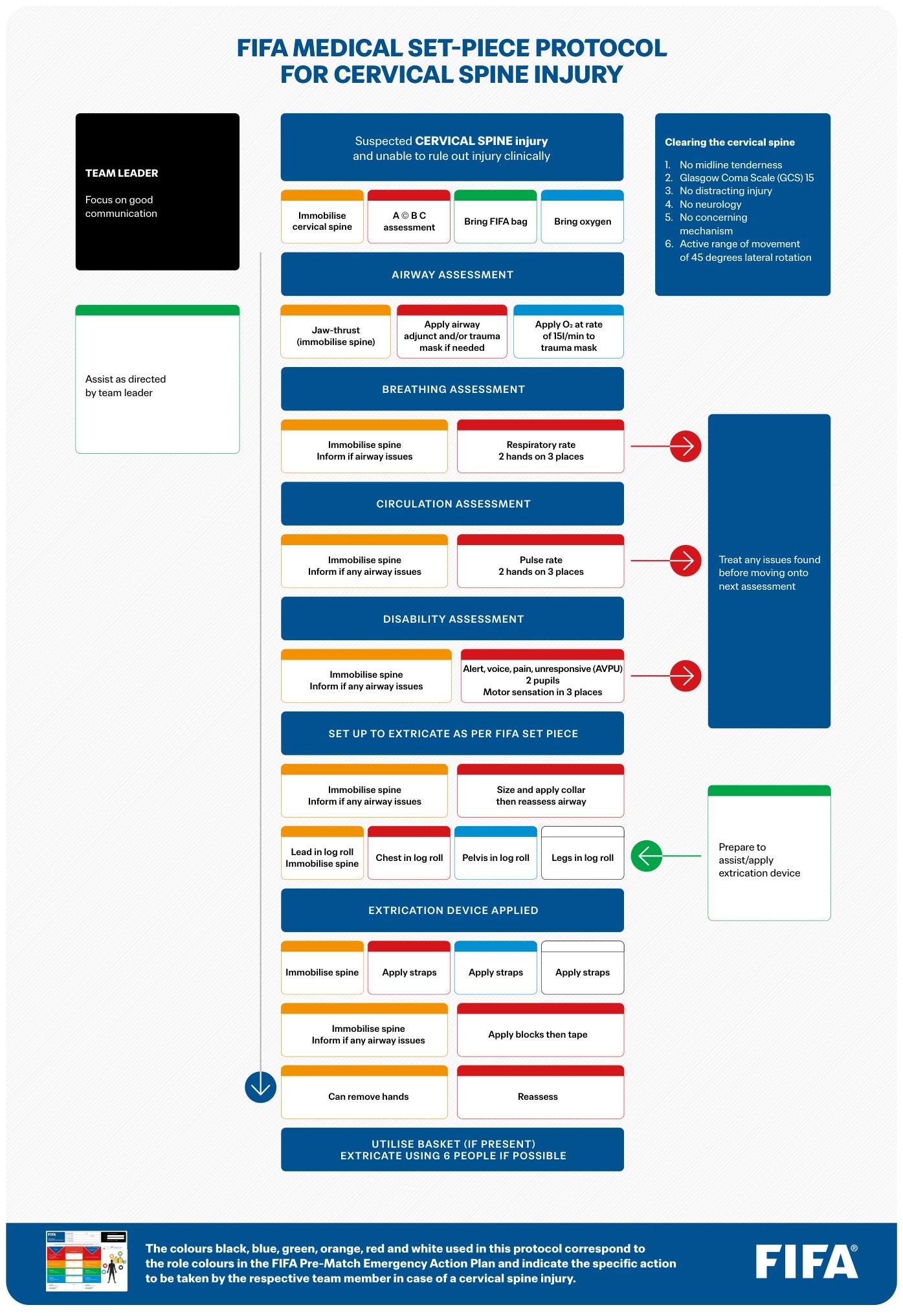
From the FIFA Medical Set-Piece Protocol for Cervical Spine Injury, the FIFA Emergency Care Manual and FIFA's Pitchside emergency care page. Film, poster and documents © FIFA. Follow FIFA's current documents and your local protocol.